
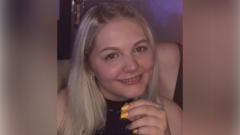
The community of Glentham, near Market Rasen, has been touched by the tragic story of 19-year-old Libby Mycroft, who passed away while receiving care at the Peter Hodgkinson Centre in Lincoln County Hospital. An inquest held in Lincoln, as reported by BBC Lincolnshire, revealed that Libby had shown signs of her bright personality just moments before her untimely death.
On the day of her passing, Libby had spent time with her family away from the ward. Concerned about her well-being, they had asked the staff to keep a close watch on her, as she had been unusually quiet. Less than half an hour before she was found unconscious, Libby had smiled and given a thumbs-up to a staff member, demonstrating her warmth and resilience despite her struggles with mental health issues.
The inquest recorded a narrative verdict, with the jury foreperson noting that the evidence did not provide a clear conclusion regarding Libby's intent. Libby had been admitted to Castle Ward under the Mental Health Act in May 2024 and was subject to 30-minute observations. The court heard that a senior mental health support worker checked on her at 19:38 GMT, reporting that Libby appeared fine and showed no obvious signs of distress.
However, the situation changed shortly after. At 20:04 GMT, the alarm was raised, and it was noted that there was a delay in paramedics accessing the ward. The East Midlands Ambulance Service received the call at 20:08 and arrived at the entrance two minutes later, but they were initially unable to enter the building. A staff member from elsewhere on the site eventually let them in, and they reached Libby at 20:13. Despite efforts to resuscitate her, she was pronounced dead at 21:54.
Eve Baird, chief operating officer at Lincolnshire Partnership NHS Foundation Trust, expressed sorrow over Libby's death and confirmed that their investigation found no failings in her care. Nonetheless, she stated that steps would be taken to ensure quicker access to wards during emergencies. Baird emphasized the trust's commitment to learning from this incident to improve future care.
Coroner Paul Smith spoke kindly of Libby, acknowledging the warmth of her personality that shone through her struggles. He offered condolences to her family, recognizing that no words could ease their pain and loss. He encouraged them to remember Libby for her positive qualities during difficult times.
As the community reflects on this heartbreaking story, it raises important questions about mental health care and the support available for young people facing similar challenges. How can we come together to ensure that no one feels alone in their struggles with mental health?